Molnupiravir for COVID-19: how Molnuvir differs from original Lagevrio

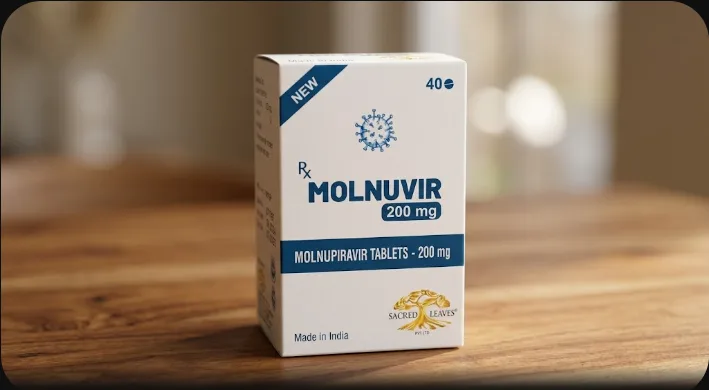
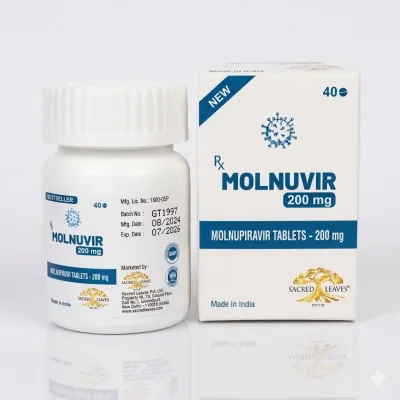
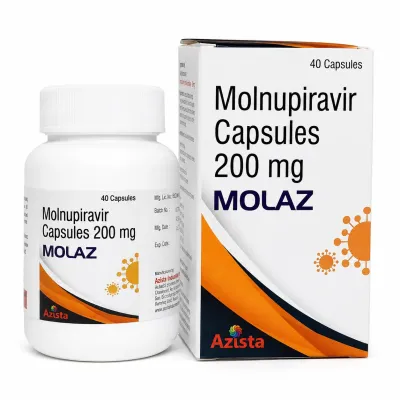
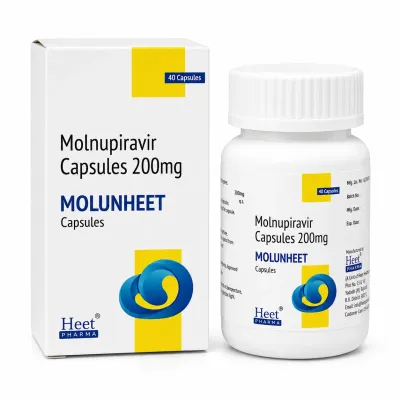
Molnupiravir is a COVID-19 pill that only makes sense in the first days of illness. Together with Paxlovid (nirmatrelvir with ritonavir) it was one of the first antivirals built specifically against the coronavirus. The original is called Lagevrio and is made by Merck. In the Unifarm catalogue molnupiravir is available as Molnuvir, Molaz and Molunheet.
Below: how it works, how it differs from favipiravir, who it is prescribed for and who should not take it.
How molnupiravir works and why the first days matter
To multiply, the virus copies its RNA again and again. In the body molnupiravir turns into a molecule that looks very much like one of the building blocks of that RNA. The viral enzyme does not notice the swap and builds it into new copies. With every round the viral genome collects more errors, until the new virus particles can no longer function. The mechanism has a name: lethal mutagenesis.
That explains the timing. Disrupting the copying only helps while the virus is actively multiplying, so the course is started within 5 days of the first symptoms. Later the peak of replication has passed, and the body is dealing less with the virus itself than with what the infection has left behind.
The standard course is four 200 mg capsules twice a day for 5 days (1600 mg a day). It is prescribed first of all to people at higher risk of severe illness: older adults and people with obesity, diabetes or chronic heart and lung disease. Whether you need it is for a doctor to decide.
Molnupiravir and favipiravir are not the same thing

Lethal mutagenesis
four 200 mg capsules, twice a day, 5 days

Favipiravir stops the viral enzyme from working at all. Molnupiravir lets it work but feeds it faulty material. That is why the two drugs have different doses, different tolerability and a different amount of evidence in COVID-19, and why swapping one for the other on your own is a bad idea.
Generic and original
| Parameter | Lagevrio (original) | Molnuvir (generic) |
|---|---|---|
| Active ingredient | Molnupiravir | Molnupiravir |
| Manufacturer | Merck (USA) | Indian manufacturers (under an MPP licence) |
| Dosing | 800 mg twice a day, 5 days | 800 mg twice a day, 5 days |
| Price | Higher | Lower |
Many Indian molnupiravir generics are made under a voluntary Merck licence through the Medicines Patent Pool (MPP). It is an official programme that allows the drug to be produced more cheaply for low- and middle-income countries. It has nothing to do with the grey market.
Who molnupiravir is not for
- Pregnant women and those planning a pregnancy. In animal studies the drug disrupted bone and cartilage growth in the foetus, so it is contraindicated in pregnancy. Women need reliable contraception during the course and for 4 days after it.
- Men planning to conceive. For the same reason the label advises barrier contraception for at least 3 months after the course.
- Children and teenagers under 18. Because of the possible effect on growing bone and cartilage, the drug is not used in paediatrics.
- Young, healthy people with mild illness. Without risk factors the benefit is minimal: the body usually copes on its own, and molnupiravir is not routinely prescribed to these patients.
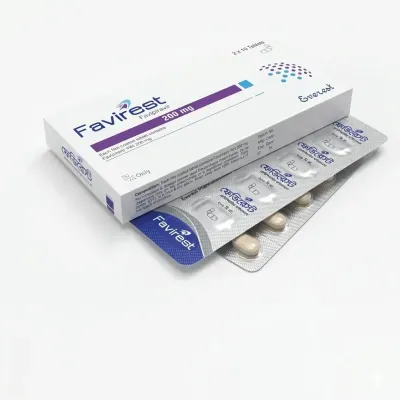
A drug with a similar job but a different mechanism is Favirest (favipiravir). Which one is needed, and whether one is needed at all, is for the doctor to decide from the day of illness, the symptoms and other conditions. One more thing: neither replaces vaccination.