How to tell a counterfeit from the original: a Venclyxto 100 mg case study

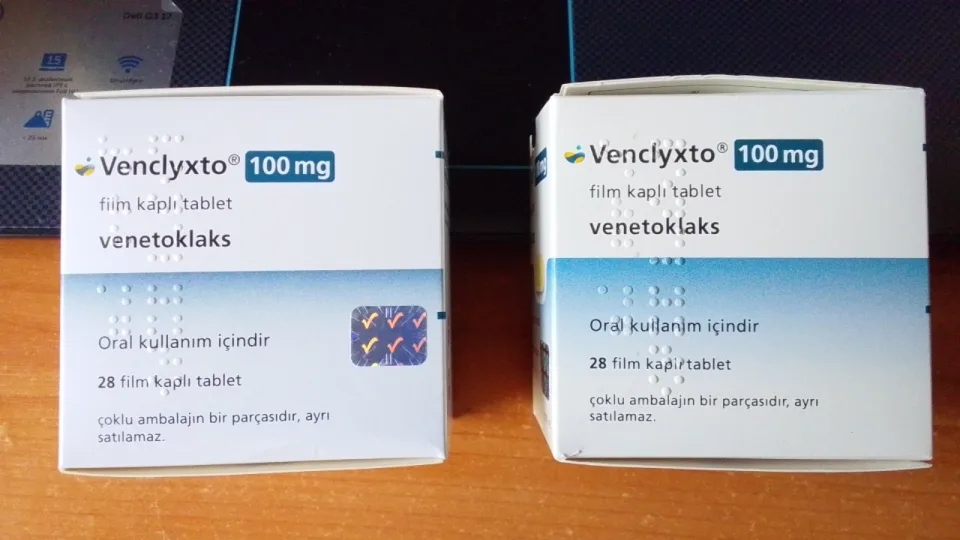
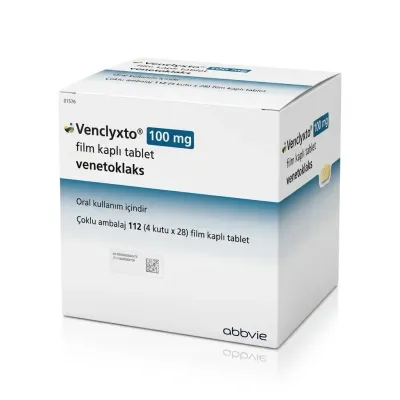
Counterfeits of expensive cancer medicines keep getting better: the box, the fonts and even the tablets can look almost like the real thing. Here is a real example from our practice — two packs of Venclyxto 100 mg (venetoclax, AbbVie) made for the Turkish market. In every photo, the original is on the left and the counterfeit is on the right.
No single sign is a 100% guarantee: manufacturers change their designs, and counterfeiters copy even batch numbers. But a fake almost always gives itself away through small details — taken together.
1. The holographic sticker on the box
From the outside the boxes look almost identical: the same font, blue band, Braille and the line “çoklu ambalajın bir parçasıdır, ayrı satılamaz”. What sets them apart is the security hologram with tick marks (see the photo at the top).
- On the original, the sticker is on the front panel and clearly shifts colours as you tilt it.
- On the counterfeit, the sticker is on a different side of the box, and the colour shift is duller and less distinct.
Tip: tilt the box under a light. A genuine hologram plays with different colours rather than just shining.
2. How the leaflet is folded
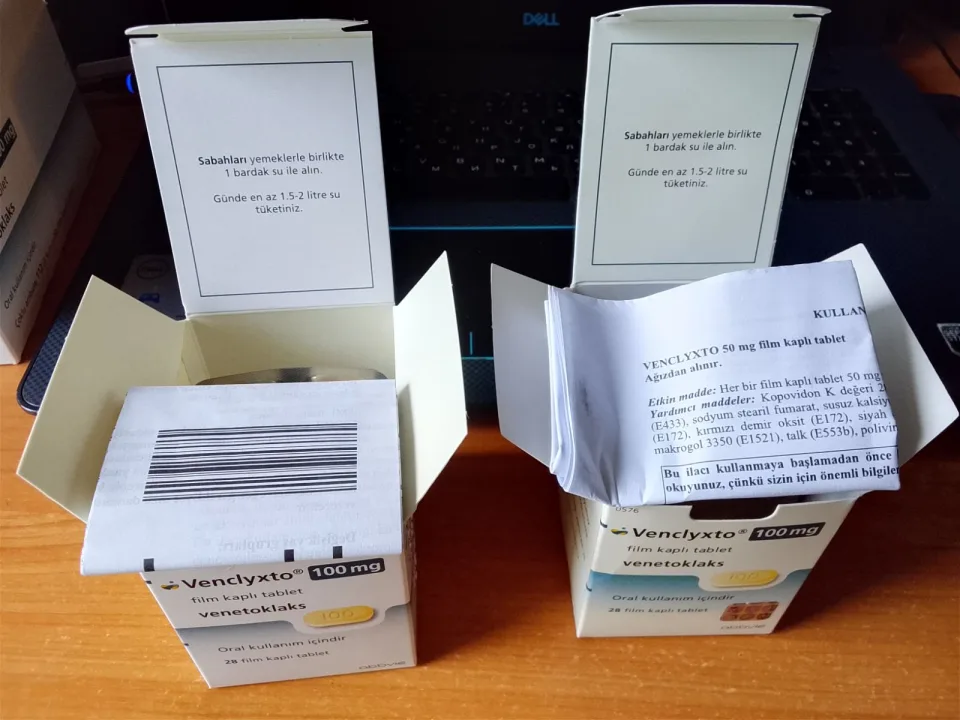
At the factory, leaflets are folded by machine: the folds are straight, the edges line up and nothing sticks out or gets crumpled. In counterfeits the leaflet is often folded by hand or on poorer equipment — it is uneven, creased and folded at an angle.
3. The print on the blister foil
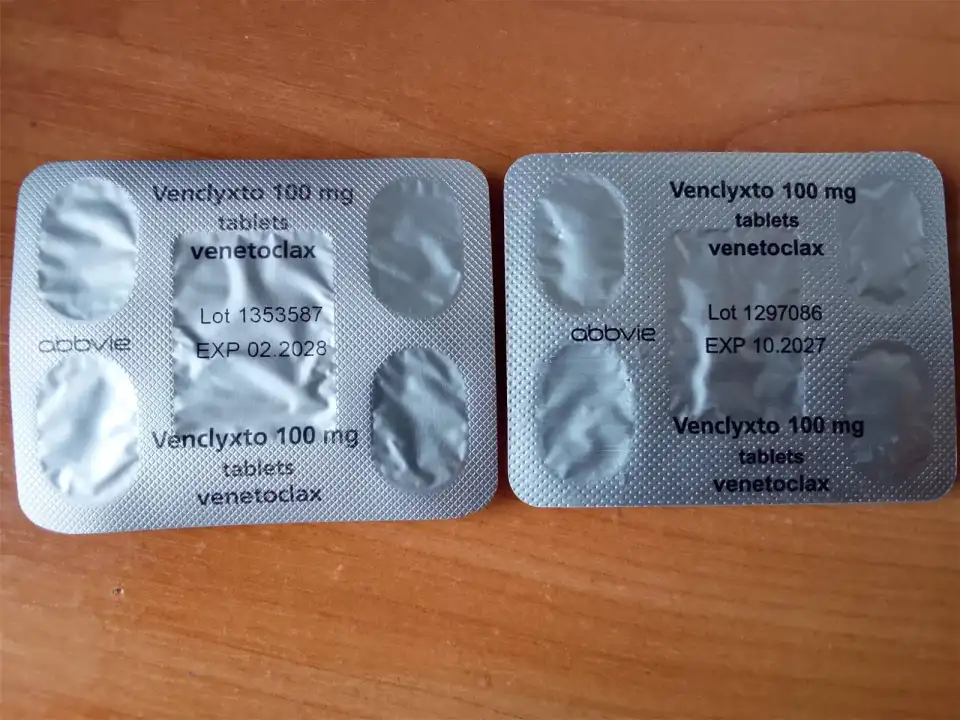
Both foils carry the name, “tablets venetoclax”, the abbvie logo, the batch number (Lot) and the expiry date (EXP). But on the counterfeit, all the text is shifted to the right relative to the tablet pockets, while on the original it sits exactly in the centre.
Note that the counterfeit also has a batch number and expiry date, and they look plausible. On their own they do not prove authenticity — they get copied.
4. The marking in the blister window
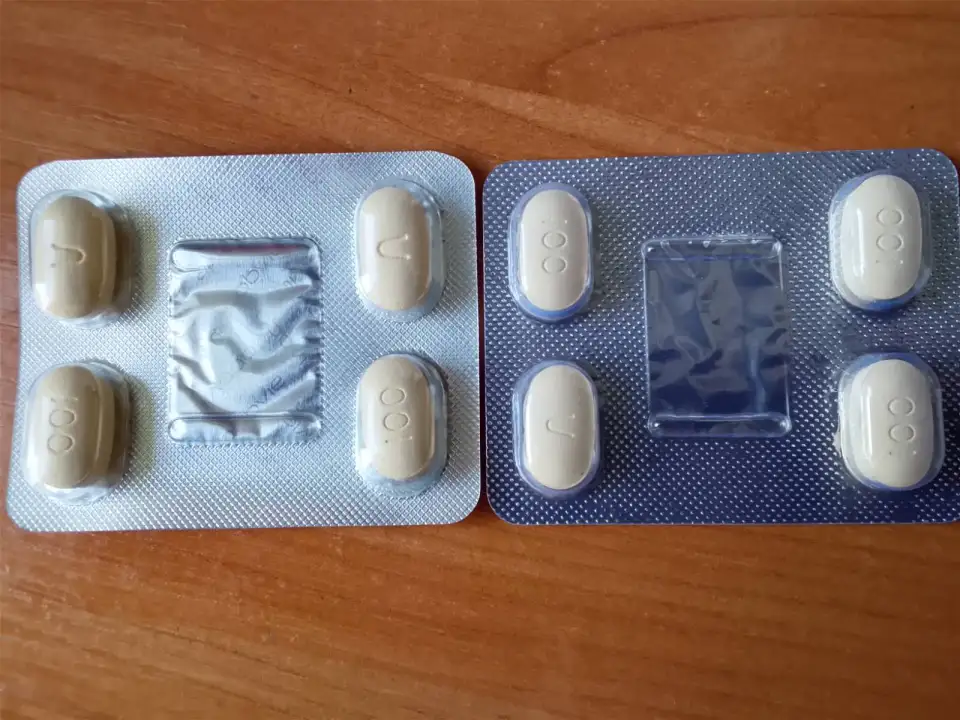
On the tablet side there is a rectangular window in the middle of the blister. On the original, you can see foil with the abbvie name through it. On the counterfeit the window is empty — just clear plastic with no marking.
The tablets themselves are almost identical: the same colour, shape and “V” and “100” engraving. So you can hardly tell a fake by the tablet — look at the packaging.
The key point: the original is more precise in the details
A counterfeit can look very much like the original. But in a factory with quality control the small things are done flawlessly: even print, a neatly folded leaflet, a crisp hologram and markings in all the right places. If several small things are “slightly off” at once, that is a reason to be cautious.
Checklist: what to check when your medicine arrives
- Hologram — in its usual place and shifting colours.
- Leaflet — folded neatly, not creased.
- Foil print — even, centred, not shifted or blurred.
- Manufacturer’s markings — present everywhere they should be, including the blister window.
- Batch and expiry date match on the box and the blister.
- Overall quality — glue, box folds, print without smudges.
What to do if you are in doubt
Do not start taking it. Photograph the box from all sides, the leaflet and both sides of the blister, and send the photos to us — we will compare them with reference photos of the original. You can also contact the manufacturer’s local office or the national medicines regulator.
We have already rejected batches with discrepancies — read more in our section on fighting counterfeits.